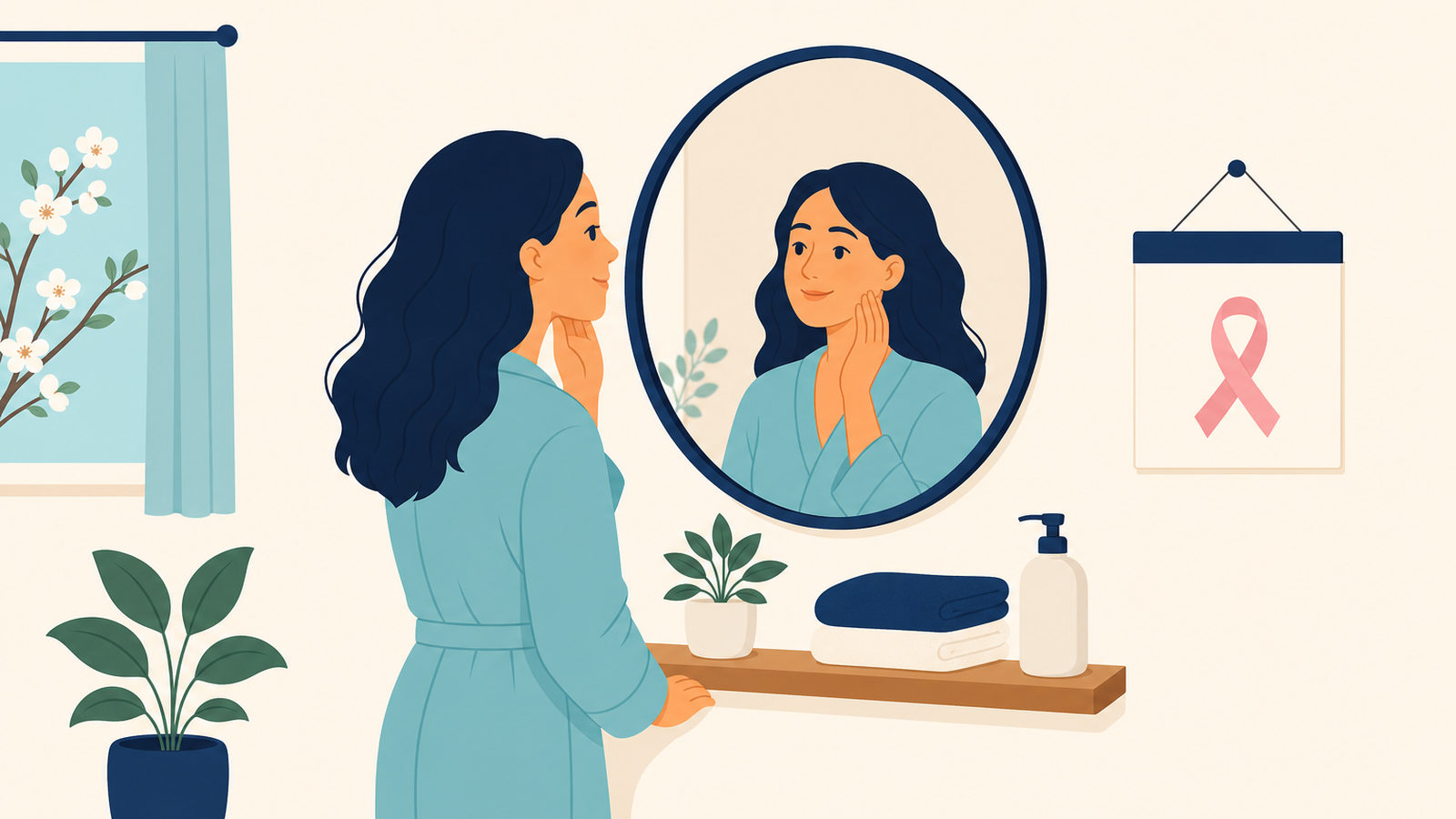
Skin cancer: get to know your skin
National Skin Cancer Action Week runs from 15 to 22 November 2026. Cancer Council Australia calls skin cancer Australia's most common, yet preventable, cancer. Around two in three Australians will develop skin cancer in their lifetime.
Cancer Council's advice is simple. Get to know your skin. If you notice any new spots or changes to existing spots, see a GP promptly.
How to check your skin
Undress completely and check in good light.
Check your whole body, not just the parts that see the sun. That includes the soles of your feet, between your fingers and toes and under your nails.
Use a mirror for hard-to-see areas like your back and scalp, or ask someone you trust to check for you.
Make checking your skin a regular habit, so you notice new spots and changes.
What to look for
Cancer Council lists these changes to watch for:
a new mole or spot
a mole that grows or changes in colour, size or shape
an outline that is notched or irregular
a spot that becomes raised or lumpy
a surface that is rough, scaly or ulcerated
a spot that itches, tingles, bleeds or weeps
a spot that looks different from the others
The three main types of skin cancer
Melanoma is the most deadly form of skin cancer. It can appear as a new spot or as a spot that changes in colour, size or shape. It can also appear on skin that is not normally exposed to the sun.
Basal cell carcinoma is the most common and least dangerous type. It can look like a red, pale or pearly lump or a dry, scaly area. It grows slowly.
Squamous cell carcinoma can look like a thickened, red, scaly spot that may bleed or crust. It grows over some months and is more likely in people over 50.
The ABCDE guide for melanoma
Asymmetry: the two halves of the spot don't match.
Border: the edge is irregular or spreading.
Colour: it is blotchy, with several colours.
Diameter: the spot is getting bigger.
Evolving: the spot is changing or growing.
A change is not always cancer
Noticing a change does not necessarily mean you have skin cancer. It is still important to have it checked by a GP.
Some people have a higher risk. Having more moles or freckles increases your risk. So does skin that burns easily. A GP can talk with you about your own level of risk.
Protect your skin too
This year's theme is "sun safe habits last a lifetime". Cancer Council recommends all five forms of sun protection whenever the UV is 3 or above. Slip on clothing, slop on sunscreen, slap on a hat, seek shade and slide on sunglasses.
Talk to us
If you have noticed a new spot or a change in your skin, book an appointment to have it checked.
Call our team on 02 9528 5266. Call us Monday to Thursday 8:00am to 5:30pm and Friday 8:00am to 2:00pm. We are closed Saturday, Sunday and public holidays.
Source
Cancer Council Australia, Check for signs of skin cancer: https://www.cancer.org.au/cancer-information/causes-and-prevention/sun-safety/check-for-signs-of-skin-cancer
Cancer Council Australia, National Skin Cancer Action Week 2026: https://www.cancer.org.au/nscaw2026
This article is general health information. It is not advice about your own circumstances.